Gym tiles are made from recycled rubber, virgin rubber, or PVC, with recycled rubber being most durable and cost-effective.
What Are Gym Tiles Made Of?
Gym tiles are made from recycled rubber, virgin rubber, or PVC materials, with recycled rubber being the most common choice in India due to its durability and cost-effectiveness.
I've been supplying gym flooring across Mumbai, Delhi, and Hyderabad since 2016, and the material composition question comes up almost daily. Let me break down exactly what goes into these tiles and why it matters for your gym.
Recycled Rubber: The Most Popular Material
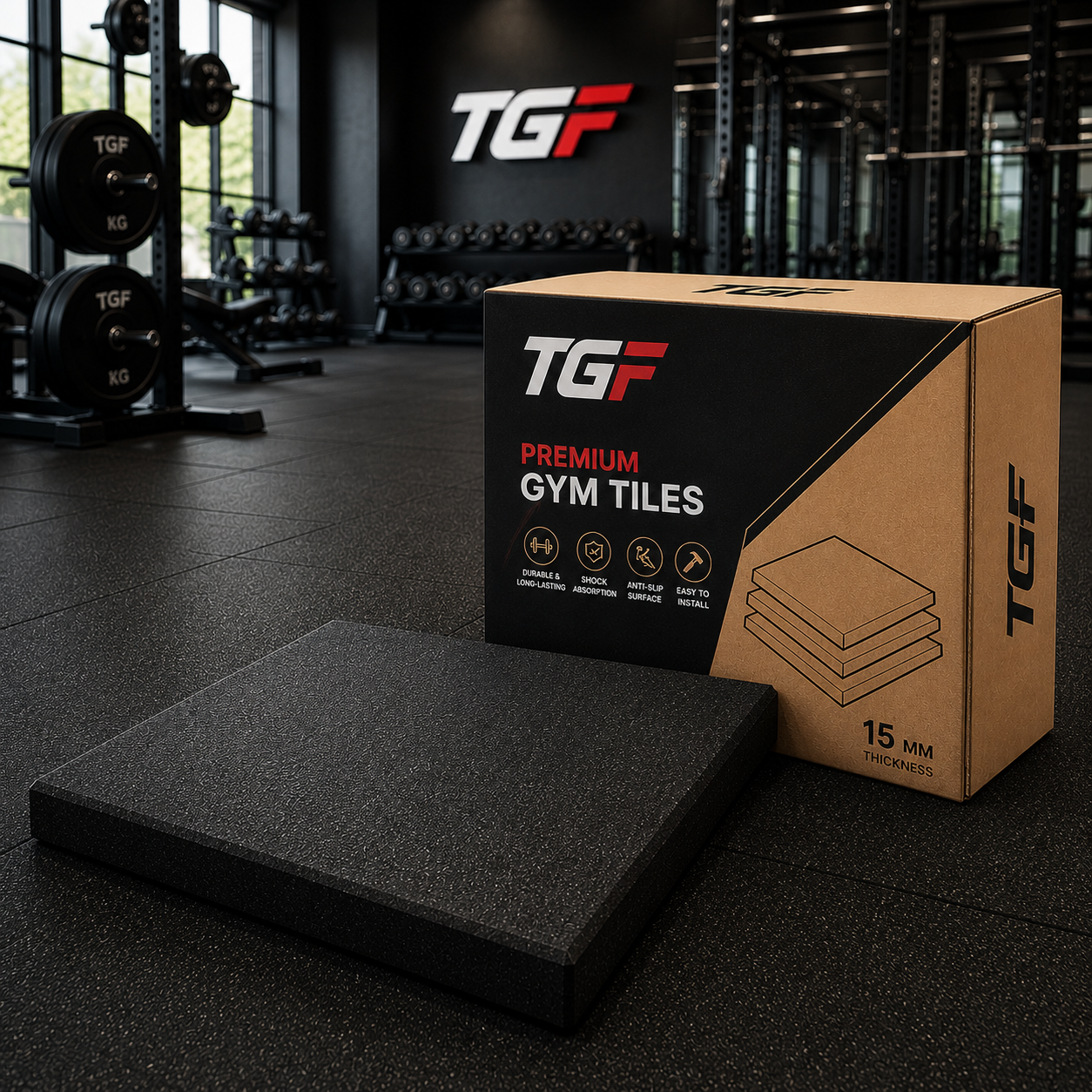
Most gym tiles in India are made from recycled rubber, primarily sourced from old vehicle tires. This isn't low-quality material — it's an incredibly durable option that handles heavy weights and intense workouts.
The manufacturing process grinds down used tires into fine crumb rubber, which is then mixed with binding agents (usually polyurethane) and compressed under high pressure and heat. The result is a dense, shock-absorbing tile that can last 10-15 years in a commercial gym setting.
Our recycled rubber tiles come in various thicknesses. The 10mm version at Rs.55 per sq ft works well for cardio zones in budget gyms across Andheri and Malad. For proper free weight areas, I always recommend the 15mm at Rs.85 per sq ft or 20mm at Rs.100 per sq ft.
The 30mm thickness (Rs.150 per sq ft) is what serious powerlifting gyms in Bandra and South Delhi choose. For specialized Olympic lifting platforms or CrossFit boxes, the 40mm tiles at Rs.210 per sq ft provide maximum impact protection.
Recycled rubber tiles typically contain 80-95% rubber content, with the remaining percentage being the binding agent and colour pigments (usually EPDM granules for the coloured top layer).
Virgin Rubber: Premium Quality
Virgin rubber tiles are made from new rubber that hasn't been previously used. This material is more expensive but offers specific advantages.
The main benefit is reduced odour. Recycled rubber tiles have a distinct rubber smell (like new tires) that fades over 2-4 weeks. Virgin rubber has minimal smell from day one, which matters for boutique studios in upscale areas like Juhu or Golf Course Road Gurgaon.
Virgin rubber also provides better colour consistency and can achieve brighter shades. If you want pure white or bright blue flooring, virgin rubber is your only option.
However, for most gym owners I work with, the price difference doesn't justify the benefits. Recycled rubber performs identically for weight training, and the smell issue resolves naturally with ventilation.
PVC and Foam Materials
Some tiles marketed as "gym tiles" use PVC (polyvinyl chloride) or EVA foam. I need to be direct here — these aren't suitable for real gyms with weights.
PVC tiles work fine for yoga studios, aerobics rooms, or home workout spaces. They're lighter, easier to install, and cheaper. But drop a 20kg dumbbell on PVC, and you'll likely crack or dent it.
EVA foam tiles (the interlocking puzzle mats) are even softer. They're appropriate for kids' play areas or gentle exercise zones, but not for any gym with barbells or dumbbells.
When gym owners in Pune or Bangalore ask me about these alternatives to save money, I show them the math. Replacing damaged PVC tiles every 6-12 months costs more than installing proper rubber tiles once.
The Binding Agents and Additives
The rubber crumb alone won't hold together as a tile. Manufacturers use binding agents, typically polyurethane-based, to create the solid structure.
Quality matters enormously here. Cheap binding agents break down faster, causing the tile to crumble at edges or lose density. This is why some imported tiles from unknown brands fall apart within a year, while good quality tiles last over a decade.
Colour pigments (EPDM granules) are added to the top layer for aesthetics. Black tiles are usually solid rubber throughout. Coloured tiles — red, blue, grey, green — have a coloured top wear layer of 2-3mm over a black rubber base.
Some manufacturers add UV stabilizers if tiles will be used outdoors (terrace gyms are common in Mumbai). Anti-microbial additives are sometimes included, though honestly, regular cleaning matters more than any additive.
How to Identify Quality Gym Tile Material
Not all rubber tiles are equal. Here's what I check when evaluating material quality:
Density test: A quality 15mm tile should weigh around 3.2-3.5 kg per square foot. If it's lighter, the rubber content is probably lower, with more filler material.
Flexibility: Good rubber tiles have some flex but spring back immediately. If you can bend a tile easily or it stays curved, the binding agent is weak.
Smell intensity: Strong chemical smells (not rubber smell) indicate excessive or low-quality binding agents. Pure rubber smell is normal and harmless.
Edge quality: Examine the cut edges. You should see consistent rubber crumb throughout. If you see large gaps or inconsistent texture, the compression process was inadequate.
Surface wear layer: For coloured tiles, the EPDM top layer should be at least 2mm thick. Thinner layers wear through quickly in high-traffic gyms.
I stock tiles from manufacturers who maintain consistent quality because I've seen the problems that cheap alternatives create. A gym in Thane once bought tiles at Rs.35 per sq ft from an unknown supplier. Within eight months, tiles were crumbling and they had to replace everything — ending up spending more than if they'd chosen quality tiles initially.
Making the Right Choice for Your Gym
For 95% of gyms I supply to — from 500 sq ft neighborhood gyms in Navi Mumbai to 5000 sq ft facilities in Hyderabad — recycled rubber tiles are the right answer.
They're made from durable material, priced reasonably, and perform excellently under heavy use. The 15mm thickness at Rs.85 per sq ft is the sweet spot for most commercial gyms with a mix of cardio and free weights.
If you're setting up a dedicated powerlifting or CrossFit space, go thicker — 20mm or 30mm depending on the typical drop heights and weights involved.
Virgin rubber only makes sense for boutique studios where aesthetics and zero smell are worth the premium, or for specific colour requirements that recycled rubber can't achieve.
We maintain stock across our warehouses in Bhiwandi (Mumbai), Delhi NCR, and Hyderabad. Installation is straightforward — most contractors can handle it, or we can connect you with experienced teams.
WhatsApp us at +91-9818241705 — free quote within 4 hours.