Interlocking gym tiles don't need glue for most installations; the interlocking mechanism provides adequate stability.
Do Interlocking Gym Tiles Need Glue?
No, interlocking gym tiles do not need glue in most gym installations. The interlocking mechanism itself creates a stable, secure surface that stays in place through friction and the weight of equipment.
I've been installing rubber gym flooring across Mumbai, Pune, and Bangalore since 2016. Most gym owners are surprised when I tell them they can skip the adhesive entirely. It saves them money and makes future floor modifications much easier.
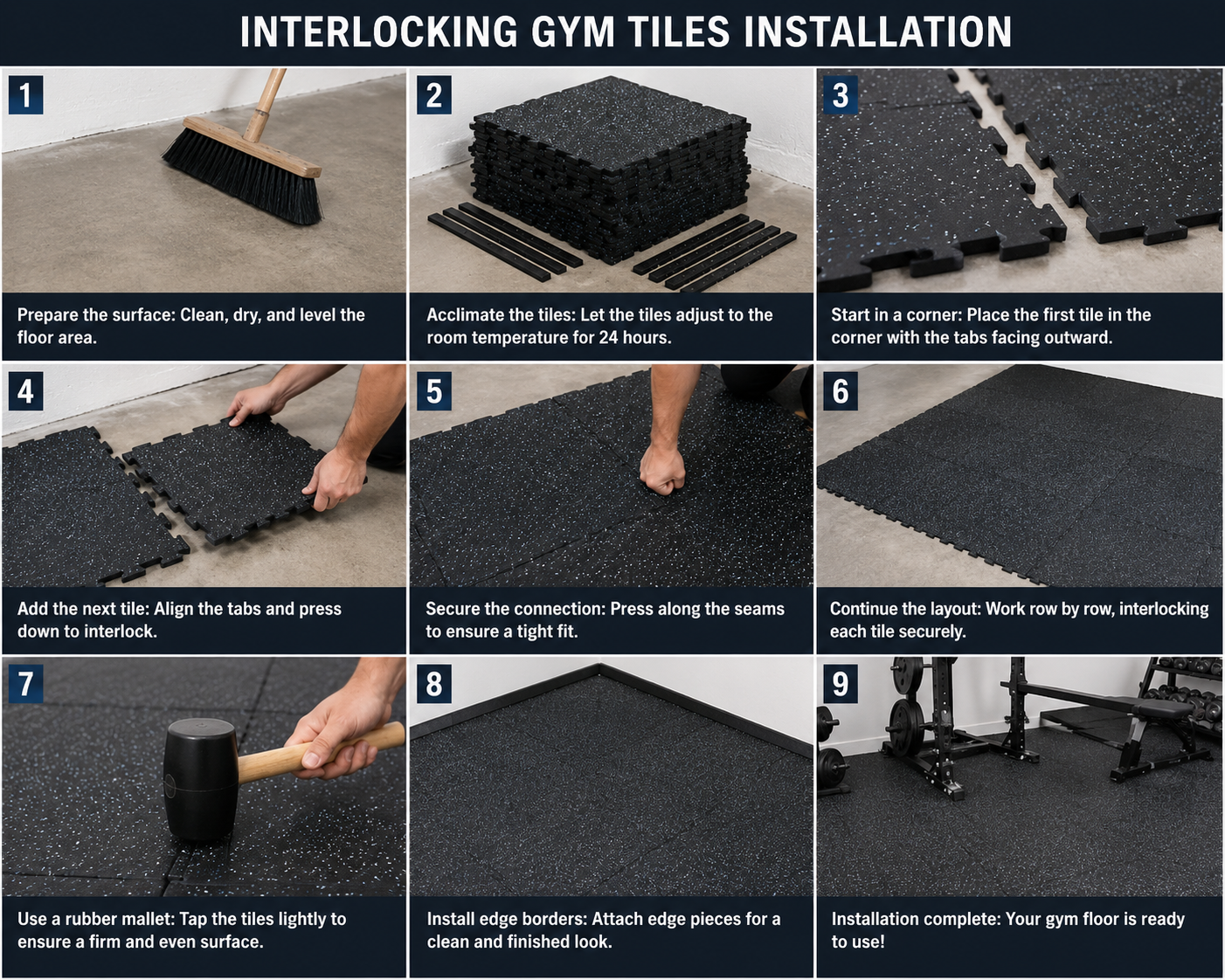
The whole point of interlocking tiles is their puzzle-piece design. They snap together at the edges and create a unified surface without any bonding agent. Once you've covered your floor area and placed your equipment, those tiles aren't going anywhere.
When You Can Skip the Glue Completely
Most commercial gyms in India don't need glue for their interlocking tiles. Here's when you're safe to install without adhesive:
Standard gym setups: If you're running a typical gym with cardio equipment, weight machines, free weights, and functional training areas, the tiles will stay put on their own. The combined weight of treadmills, racks, and dumbbells locks everything in place.
Fixed equipment layouts: Gyms that don't frequently rearrange their floor plan do well with loose-laid tiles. A gym in Andheri I worked with in 2019 still has the same 15mm tiles (Rs.85 per sq ft) we installed without glue. Zero shifting issues.
Wall-to-wall installations: When your tiles run from wall to wall with minimal gaps, there's nowhere for them to shift. The perimeter walls act as natural barriers.
Heavier tile thicknesses: 20mm (Rs.100 per sq ft), 30mm (Rs.150 per sq ft), and 40mm (Rs.210 per sq ft) tiles have more weight per square foot. They're less likely to move compared to thinner options.
When Glue Actually Makes Sense
Some situations benefit from adhesive, even with interlocking tiles:
High-impact training zones: CrossFit boxes, Olympic lifting platforms, and plyometric areas see aggressive movements. Burpee broad jumps, sled pushes, and barbell drops can gradually shift tiles over time. A gym in Navi Mumbai doing heavy CrossFit programming glued down their 30mm tiles in the main training zone but left the stretching area loose.
Incomplete coverage areas: If you're only covering part of a room and leaving exposed concrete around the edges, perimeter tiles might creep outward. Gluing the outer rows prevents this.
Very smooth subfloors: Polished concrete or certain tile surfaces are slippery. The rubber tiles have less grip and might slide. A quick adhesive application solves this.
Commercial spaces with liability concerns: Some premium gyms in Mumbai's business districts prefer glued installations for insurance and safety audit reasons, even though it's not technically necessary.
Outdoor installations: Rooftop gyms or terrace setups exposed to rain and wind need adhesive. Water can get between tiles and reduce friction. Wind can catch edges in partially covered areas.
The Middle Ground: Perimeter Gluing
Many gym owners choose a hybrid approach. They glue only the perimeter rows and leave the interior tiles loose-laid.
This gives you 80% of the flexibility with 95% of the stability. If you need to access the subfloor for plumbing or electrical work, you can lift the interior tiles easily. The glued border keeps everything contained.
We did this at a 3,000 sq ft gym in Thane. The owner wanted expansion flexibility but needed to prevent edge creep near the entrance. We glued a 2-foot border all around using polyurethane adhesive and left the rest free-floating.
Cost difference? The adhesive and labor added about Rs.15 per sq ft to the perimeter area only. Minimal investment for significant peace of mind.
What Type of Glue If You Decide to Use It
If your situation calls for adhesive, use the right kind:
Polyurethane-based adhesive: This is the standard for rubber flooring in India. It creates a strong bond but allows some flexibility. The rubber can still absorb impact without the glue cracking.
Not regular construction adhesive: Don't use Fevicol or standard tile adhesive. They're too rigid and will fail under the constant impact and weight cycling of gym equipment.
Coverage rates: Expect to use about 250-300 grams per square meter. A 5kg bucket covers roughly 16-18 sq meters. Budget around Rs.10-15 per sq ft for adhesive material plus application labor.
Application method: Trowel the adhesive onto the concrete subfloor, not the tiles. Use a notched trowel for even distribution. Press tiles firmly and allow 24 hours before placing heavy equipment.
Our Installation Recommendations by Gym Type
Standard commercial gym (cardio + weights): No glue needed. 15mm tiles (Rs.85 per sq ft) work perfectly as loose-laid installations. We've done hundreds like this across Mumbai.
CrossFit or functional training: Consider perimeter gluing or full adhesive in the main workout zone. Use 30mm or 40mm tiles for better impact absorption. The lifting platforms definitely need glue.
Home gym: Almost never needs glue. 10mm tiles (Rs.55 per sq ft) laid loose work perfectly for home setups. You might rearrange equipment later anyway.
Yoga or Pilates studio: No glue. Use thinner tiles like 10mm since impact absorption isn't the priority. The lighter equipment won't shift the floor.
MMA or martial arts: Perimeter gluing recommended. The pushing, pulling, and grappling movements create lateral forces that can shift tiles over time.
Installation without glue takes half the time. A 2,000 sq ft gym takes about 4-6 hours with a two-person team. Add glue and you're looking at 8-10 hours plus curing time.
The real advantage? Future flexibility. A gym in Powai changed their entire floor layout eight months after installation. They pulled up 800 sq ft of tiles from one area and reinstalled them in their new expansion space. Try doing that with glued flooring.
We stock all thicknesses from our Bhiwandi warehouse near Mumbai. Also have inventory in Delhi NCR and Hyderabad for faster delivery across India.
Starting price is Rs.50 per sq ft for our 2mm rubber rolls. Tiles start at Rs.55 per sq ft for 10mm thickness. All prices include GST.
WhatsApp us at +91-9818241705 — free quote within 4 hours.