Rubber gym tiles resist water effectively but aren't waterproof, handling sweat and spills perfectly fine.
Are Rubber Gym Tiles Waterproof?
Rubber gym tiles are water-resistant but not completely waterproof in the technical sense. They repel water and moisture effectively, but they're not designed to create a watertight seal like bathroom waterproofing would.
I've been installing gym flooring across Mumbai, Pune, and Bangalore since 2016, and this question comes up constantly. Gym owners worry about sweat, spilled water bottles, and cleaning routines damaging their flooring investment.
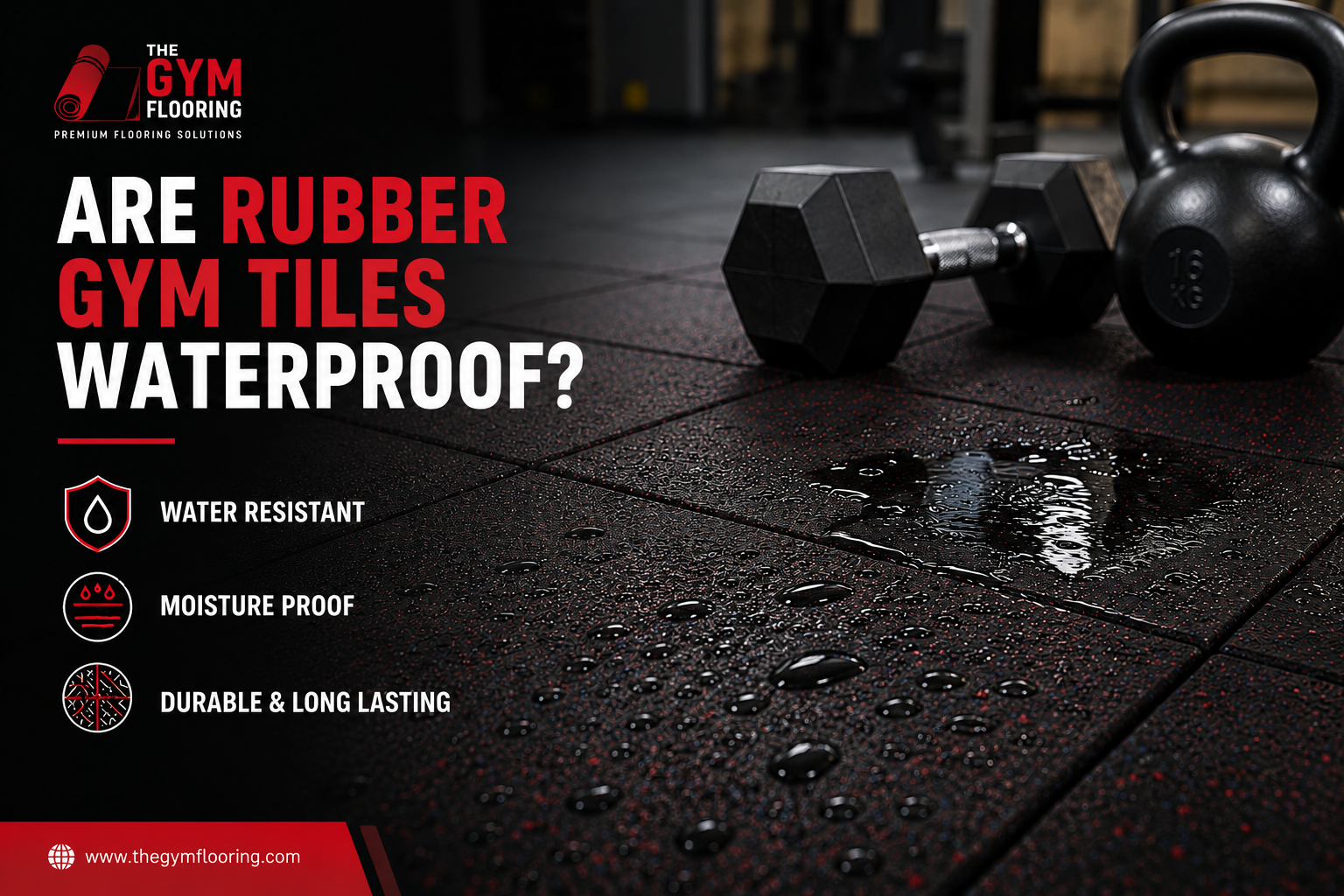
Let me break down exactly what happens when water meets rubber gym flooring and what that means for your facility.
What Water-Resistant Actually Means for Gym Flooring
Rubber tiles resist water penetration into the material itself. When you spill water on them, it sits on the surface rather than soaking in like it would with carpet or certain foam materials.
Our rubber tiles at 10mm (Rs.55 per sq ft), 15mm (Rs.85 per sq ft), and thicker options all share this property. The rubber compound naturally repels moisture.
Where the "not waterproof" part comes in: water can seep between tiles through the seams. If you pour a bucket of water on your gym floor, some will find its way through the joints to the subfloor underneath.
This matters less than you'd think for normal gym use. Sweat droplets, water bottle spills, and mopping don't create enough volume to cause problems. The water evaporates or gets wiped up before it can pool and seep through.
I've installed flooring in gyms across Andheri, Bandra, and Thane where members train intensely for hours. The floors handle daily sweat and cleaning without issues.
How Rubber Flooring Handles Different Types of Moisture
Sweat is what rubber flooring deals with most. During peak evening hours in a Mumbai gym, the amount of perspiration hitting the floor is substantial. Rubber handles this perfectly because sweat doesn't pool—it spreads thin and evaporates quickly.
Cleaning water from mopping is also fine. You're using a damp mop, not flooding the floor. The thin layer of cleaning solution sits on top and dries within minutes.
Water bottles get knocked over daily. A 1-liter spill on rubber tiles just needs a quick wipe. The water doesn't damage the rubber at all.
Where problems occur: standing water left overnight, or gyms in ground-floor spaces with moisture seeping up from below. If your subfloor has a dampness problem, that needs fixing before any flooring goes down.
One gym owner in Gurgaon ignored moisture in his basement space. Within six months, he had mold growing under his tiles. The rubber itself was fine, but the trapped moisture between rubber and concrete created problems. We had to remove everything, treat the concrete, apply a moisture barrier, and reinstall.
The Subfloor Question Nobody Asks (But Should)
Your concrete subfloor matters more than the rubber for water-related issues. Rubber tiles sit directly on concrete in most installations. If moisture comes up through the concrete, it gets trapped between the concrete and rubber.
Before we install flooring in any Mumbai warehouse gym or basement facility, we check the concrete. A simple plastic sheet test works: tape a 2x2 foot plastic sheet to the concrete, seal all edges, wait 24 hours. Moisture underneath when you peel it back means you have a subfloor moisture issue.
In such cases, we recommend a moisture barrier layer before rubber installation. This adds minimal cost but prevents major headaches later.
Properly prepared concrete plus rubber tiles creates a flooring system that handles gym moisture perfectly. I've seen installations from 2016 still performing flawlessly in high-traffic Mumbai gyms.
Thickness and Water Resistance
Thicker tiles don't provide more water resistance—the rubber compound is the same whether you choose 10mm or 40mm thickness. A 10mm tile (Rs.55 per sq ft) repels water just as well as a 40mm tile (Rs.210 per sq ft).
You choose thickness based on impact protection and the type of training. Heavy deadlifts need 20mm minimum (Rs.100 per sq ft). Olympic lifting areas should use 30mm or 40mm. Water resistance stays constant across all thicknesses.
Rubber rolls (available from 2mm to 10mm) offer slightly better water resistance at seams because they cover larger areas with fewer joints. A 2mm roll at Rs.50 per sq ft works great for yoga studios or cardio areas where water exposure is minimal anyway.
For functional training zones where kettlebells drop and sleds get pushed, tiles make more sense despite having more seams. The modular nature lets you replace damaged sections easily.
Practical Care to Maximize Water Resistance
Clean spills promptly. Don't let water sit for hours. This isn't because the rubber will get damaged—it won't—but because water finding its way to the subfloor can create issues over time.
Use appropriate cleaning products. Plain water with a mild detergent works perfectly. Harsh chemicals aren't necessary and some can degrade rubber over years of use.
Ensure good ventilation. Gyms generate humidity from members breathing and sweating. Proper airflow helps everything dry quickly. Every gym in Bangalore and Pune I've worked with runs ceiling fans constantly—it makes a difference.
Check seams periodically in high-traffic areas. Tiles can shift slightly over time. If gaps open up, water has an easier path to the subfloor. Simple fix: push tiles back together or replace if worn.
For outdoor gym areas (increasingly popular in Delhi NCR), drainage matters more than waterproofing. Rubber tiles handle rain fine, but water needs somewhere to go. Slight slope for runoff prevents pooling.
When You Actually Need Waterproof Flooring
If you're building a pool deck gym, swimming facility workout area, or shower-adjacent space, you need properly waterproofed flooring with sealed seams. Standard rubber tiles aren't the right choice there.
For 99% of gym applications—weights, cardio, functional training, CrossFit boxes, yoga studios—water resistance is plenty. True waterproofing is overkill and usually costs significantly more.
I've installed flooring in over 200 facilities since starting this business. Maybe three needed actual waterproof systems. Everyone else does perfectly fine with standard water-resistant rubber tiles.
The price difference matters too. Our rubber tiles start at Rs.55 per sq ft for 10mm thickness. Waterproof systems with sealed seams run 2-3x that cost minimum. For a 2000 sq ft gym, you're looking at Rs.1.1 lakhs versus Rs.3+ lakhs—substantial difference for a feature you don't need.
We stock everything in our Bhiwandi warehouse near Mumbai, plus locations in Delhi NCR and Hyderabad. Most orders ship within 24 hours to anywhere in Maharashtra, and we reach other metros within 3-4 days.
WhatsApp us at +91-9818241705 — free quote within 4 hours.